3
What do you feel when you read: “Thin dough baked to a perfectly crisp crust, topped with San Marzano tomato sauce, fresh mozzarella, and fragrant basil”?
And what about: “A creamy risotto with wild porcini mushrooms, aged Parmesan, and a subtle note of white truffle”?
I sincerely hope this post finds you after your meal.
It is scientifically established that the human tongue contains, on average, between 5,000 and 10,000 taste receptors. But the most fascinating part happens long before food ever touches the tongue — even before we perceive its aroma.
Research in sensory perception shows that a precise and evocative description of a dish can activate the same areas of the brain as the actual experience of taste. Words like “crispy,” “velvety,” “golden,” “melting” trigger genuine physiological responses.
We begin to “taste” before the first bite. We taste with our eyes. We taste with words. We taste through memory - through past experiences, cultural references, sometimes even childhood recollections.
In reality, salivation can begin at the mere act of reading a menu. And that is where the magic of visual design begins. Warm lighting makes a dish more appetizing.
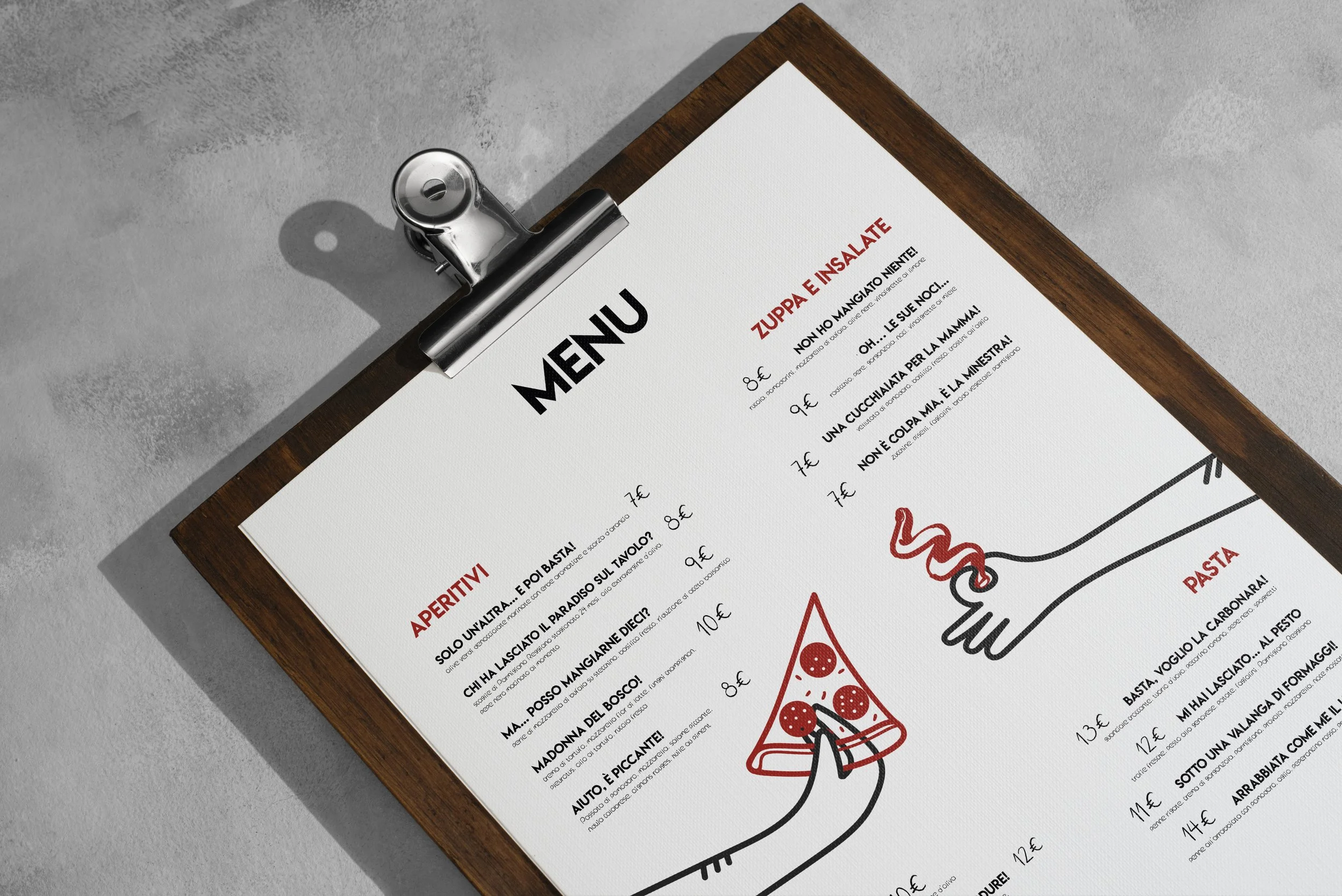
Thick, textured paper enhances the perception of quality. Thoughtful layout guides the eye with subtlety, creates rhythm, and quietly awakens appetite.
Sometimes the dish hasn’t even arrived… and yet we already feel as though we know how it will taste. Because we have already “sampled” it with our eyes.
Good design is not mere decoration. It is an essential component of the recipe. And in that recipe, the menu is the first ingredient.